
From seasoned fabricators in a high-production shop to dedicated hobbyists tackling their first garage project, the MIG welder has long been the essential workhorse for its blend of speed, efficiency, and ease of use. But the technology of 2026 bears little resemblance to the heavy, transformer-based machines of the past.
Today’s market is defined by innovation. We’re seeing lighter, more powerful inverter-based units, the rise of multi-process machines that can handle MIG, TIG, and Stick welding, and intuitive digital interfaces that take the guesswork out of setup. Features like synergic control—where the machine automatically adjusts wire speed and voltage—are no longer just high-end luxuries; they are becoming the new standard.
Choosing the right welder in this crowded, high-tech field can be daunting. Are you paying for genuine performance gains or just marketing buzz? This guide is designed to cut through the noise. We are diving deep into the specs, performance, and real-world applications of the top models available, helping you find the best MIG welder of 2026 to match your specific needs, budget, and ambitions.
Top 1. Lincoln Electric Power MIG
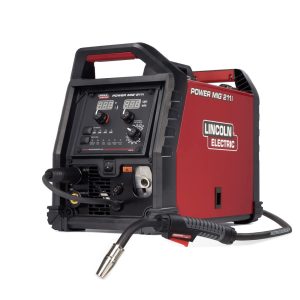
The Lincoln Electric Power MIG 211i (Model K6080-1) is a specific welding apparatus. This unit is identified as being dual-voltage, allowing it to connect to either 120V or 230V power supplies. Such adaptability is useful for operators who move between locations with different electrical setups, like a home workshop versus an industrial site. The power output is rated from 20 to 211 amps. This wide amperage spectrum indicates the machine can handle a variety of metal thicknesses, from thinner sheet metal to thicker plate.
Another aspect mentioned is that the device is flux-cored ready. This capability permits welding without an external shielding gas bottle, which is often preferred for outdoor work where wind can disrupt the gas shield. At just 41 pounds, this equipment is described as portable. Its lightweight nature makes transport between job areas less difficult.
This particular MIG welder offers a solution for users needing flexibility in both location and power source. The K6080-1 model is part of a broader category of welding tools available. The combination of its weight and versatile power input suggests it is designed for convenience. People looking for a machine that can run on standard household current yet also provide more power on a 230V circuit might find this specification noteworthy. The ability to perform flux-cored tasks adds to its potential applications.
Top 2. Hobart 500553 Handler 210 MVP MIG Welder
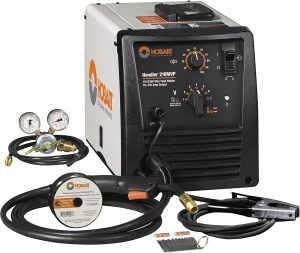
The Hobart 500553 Handler 210 MVP is a piece of equipment designed for metal fabrication. This specific MIG Welder unit often comes up in discussions about versatile tools. It is presented as an option for individuals needing to join different types of metals. The “MVP” in its name refers to the Multi-Voltage Plug, a capability that allows it to be used with standard 120V or 240V outlets. This adaptability can be a significant advantage in various settings, from a home garage to a professional shop.
For experienced fabricators, a reliable arc and consistent wire feed are paramount. This welder aims to deliver on those expectations, providing stability during use. The unit’s construction appears solid, suggesting it is made for sustained performance over time. While described as “small,” this likely points to a manageable footprint, making it a possible choice for workshops where space is a consideration. It seeks to empower users by providing a capable solution for their joining and assembly needs without excessive complexity. This tool bridges the gap between lighter-duty models and heavy industrial systems. The device is positioned as a dependable partner for various assembly tasks.
Top 3. Lincoln Electric K4876-1 POWER
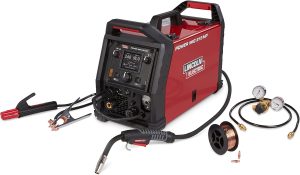
The Lincoln Electric K4876-1 represents a specific offering in the metal fabrication market. As a unit identified as the POWER MIG 215 MPi, it draws interest from individuals seeking robust solutions. This particular device is categorized as a Multi-Process Welder, indicating it’s designed to perform more than one welding style. Such versatility is often sought after in environments where project demands change frequently. For example, a repair shop or a small fabrication business might value equipment that can switch between different applications without needing separate machines.
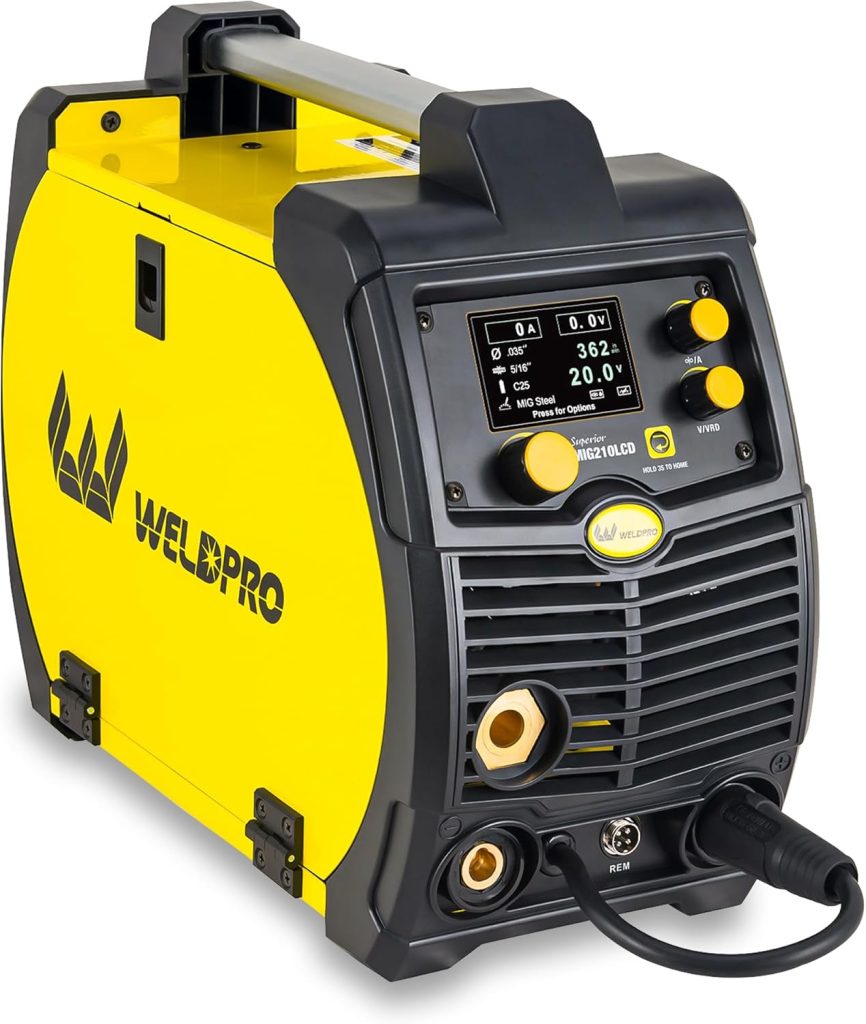
Top 4. Weldpro 200 Amp MIG210LCD Dual Voltage

The Weldpro 200 Amp MIG210LCD is presented as a flexible solution for various fabrication tasks. This equipment is a multi-process welder, suggesting it can handle several different types of applications. It supports MIG, flux-core, Lift TIG, and MMA methods. Such versatility allows an operator to switch between projects or materials without needing separate devices.
The model includes functions that seem aimed at simplifying operation, such as an automatic setting helper and a timer for spot jobs. These elements could be beneficial for achieving consistent results. The 200-amp output provides a good amount of power for various material thicknesses. Its 5-in-1 design consolidates multiple functions into a single piece of equipment. This approach might appeal to individuals with limited space or those who need an all-around tool. A 3-year warranty is noted, providing a level of support. This particular welding machine seems positioned for users who require adaptability for different metal-joining tasks. The LCD screen suggests a modern interface for managing its capabilities. People interested in a single unit for diverse fabrication needs might find this model suitable.
Top 5. Eastwood MP250i Elite Multi
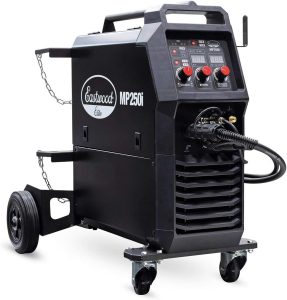
The Eastwood MP250i Elite is a piece of equipment designed for metal fabrication and repair. As a Multi-Process Welder, it is structured to handle several different types of welding operations. This kind of versatility is often valuable in a workshop where various tasks and materials are encountered. The unit provides capabilities for MIG, TIG, and ARC procedures, consolidating three common methods into one housing.
This particular item is associated with a specific power rating. The system is rated for 250 Amps. It also has a stated rated duty cycle, which is noted as 60% at that amperage level. This specification is a standard measurement for this class of machinery. It provides information about the unit’s operational performance over a set timeframe. For individuals working on diverse metal-joining challenges, having a machine that covers a wide range of processes is a key consideration. This equipment fits within that category of adaptable tools for a garage or professional environment.

